
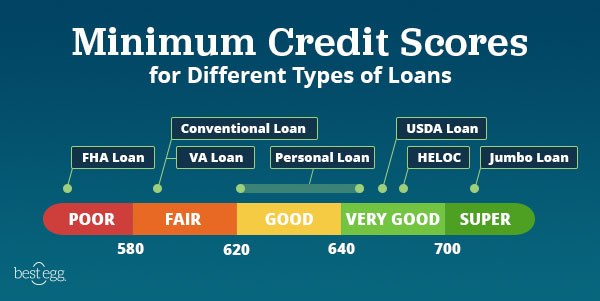
Can I actually get a personal loan if my credit score isn’t perfect? Yes, you can. But how easy that is depends entirely on how much risk a lender wants to take. I see this play out every day. Some people walk into a bank with a score that makes the loan officer smile, while others have a history of missed payments that triggers an immediate red flag. The gap between these two experiences isn’t just a few points on a FICO scale; it is a fundamental difference in how the financial world treats you.
Your credit score isn’t a binary “yes” or “no” switch. It’s more like a dimmer switch for how much it costs to borrow. High scores bring bright, clear interest rates and flexible terms. Low scores dim the lights, making terms restrictive and the cost of money much higher. When you are in the high-score range, you are negotiating with the lender; when you are in the low-score range, the lender is dictating terms to you. There is very little room for discussion in the latter scenario.
Lenders view your score as a predictor of what you’ll do next. They aren’t judging your character or your soul; they’re looking at math. They use historical data to calculate the probability of default. If the math says you might skip a payment, they’ll either say no or charge you a premium to cover the risk. Knowing where you fall on that spectrum is the only way to avoid a massive financial mistake that could haunt your credit report for years.
High Scores and the Luxury of Choice
With a high credit score, you’re basically playing on “easy mode.” Lenders don’t just want to give you money; they actually compete for your business. That competition is what keeps interest rates from becoming predatory. When multiple banks are willing to lend to you, you have the power to shop the market for the lowest Annual Percentage Rate (APR). You have the leverage here.
You can shop around. Try traditional banks, credit unions, or online lenders without fearing a rejection. Credit unions, in particular, often offer much lower rates for high scorers because they are member-owned non-profits rather than profit-driven corporations. Most importantly, you can dictate the terms. If an offer has a term that’s too short or an interest rate that feels high for your profile, you can just walk away. You have the luxury of waiting for a better deal or even asking your current bank to match a competitor’s offer.
The Power of Unsecured Options
High scorers often qualify for unsecured personal loans. The lender isn’t asking for your car title or your house as collateral; they’re trusting your score and your income alone. This is the best way to borrow because it keeps your assets safe if life gets messy. If you lose your job and can’t pay an unsecured loan, the lender can sue you or garnish your wages, but they can’t simply come and seize your car or your home through a repossession process as easily as they could with a secured loan.
Negotiating Power
Rates aren’t always fixed. If your history is stellar, you can sometimes negotiate origination fees or how fast you get funded. You might be able to convince a lender to waive the “processing fee” if you can show you have significant savings in a checking account. It’s a different world than what most borrowers deal with, where the terms are non-negotiable and “take it or leave it” is the only mantra.
To a credit department, you are a low-risk asset. That’s really all that matters.
The Middle Ground of Moderate Credit
The middle ground is where most people live, and it’s often the most frustrating spot. Your score is good enough for a “yes,” but not high enough for the best deal. You’re in the “maybe” zone. Lenders will check your score, then your debt-to-income ratio (DTI), and then your employment history before they decide. They are looking for reasons to say no, even if your score is technically “good.”
In this tier, you might not get the lowest interest rates. You might settle for a mid-range rate that’s higher than what your neighbor got. It’s a trade-off: you get the cash you need, but you pay a small premium for not having a perfect score. You might find that while a bank offers you a loan, it comes with a 12% interest rate instead of the 7% offered to those with perfect scores. Over a five-year term, that 5% difference can cost you thousands of dollars in extra interest payments.
If you’re stuck here, consider FastLendGo personal loans or similar digital-first lenders. These companies often use different algorithms than big banks. They might see value in your profile that a traditional bank would ignore because of rigid internal rules. While a bank might reject you because you have one late payment from three years ago, a specialized lender might look at your steady employment and current income and decide the risk is worth it.
Sometimes, a “no” from a big bank is just a “not right now” for a specialized lender. A single rejection doesn’t mean your credit is broken; you might just be looking in the wrong shop. Don’t go on a “hard inquiry” spree by applying to ten different places in one day; this can actually lower your score further. Instead, use “soft pull” pre-qualification tools first to see where you stand without hurting your rating.
| Credit Tier | Lender Attitude | Main Obstacle |
| Excellent | Aggressive | Finding the absolute lowest rate |
| Good | Cautious | Managing interest rate hikes |
| Fair | Skeptical | High fees and limited options |
| Poor | Dismissive | Finding any lender at all |
Understanding the True Cost of Borrowing
Many borrowers make the mistake of looking only at the monthly payment. This is a dangerous way to shop for a loan. A lender might offer you a very low monthly payment by extending the loan term from three years to seven years. On the surface, it looks affordable. However, once you run the numbers, you realize you are paying significantly more in total interest over the life of that loan. You are essentially paying for the “luxury” of a lower monthly burden.
To truly compare loans, you must look at the APR (Annual Percentage Rate) rather than just the interest rate. The APR includes both the interest rate and any upfront fees, such as origination fees. A loan with a 10% interest rate and a 5% origination fee might actually be more expensive than a loan with a 11% interest rate and zero fees. Always ask for a total cost of loan breakdown before signing anything.
Navigating the High-Risk Territory
If your score is in the lower tier, things get complicated. This isn’t a minor inconvenience; it’s a different category of financial product. When your score is low, the traditional banking system often shuts its doors. You might find that the only people willing to lend to you are “subprime” lenders. These are firms that have specialized in high-risk lending, and they charge a premium to offset the high statistical probability that they won’t get their money back.
These lenders take the risk, but they aren’t doing it out of kindness. They know they’ll make a profit from the high interest rates you’ll pay. You have to be careful. It’s easy to fall into a debt trap when you’re borrowing from someone who is essentially betting against you. If you are borrowing $5,000 to pay off a $5,000 credit card, but the new loan has a 30% interest rate and the credit card was at 22%, you haven’t solved your problem, you’ve just made it more expensive and harder to escape.
The Cost of Speed
Low-score loans often promise “instant” approval. That’s a double-edged sword. The speed is great in an emergency, such as a sudden medical bill or a necessary car repair. But that speed is usually fueled by high origination fees. These are upfront costs taken out of your loan before you ever see the cash. If you apply for a $1,000 loan and they charge a 10% origination fee, you only receive $900 in your bank account, but you still owe interest on the full $1,000. Always calculate your “net proceeds” versus your “total debt.”
Watch the Fine Print
I’ve seen people sign agreements they didn’t fully understand because they were desperate. If you’re in this category, read every single line. Some loans have prepayment penalties, meaning if you try to pay the loan off early to save on interest, the lender actually punishes you. It sounds insane, but it happens. They want to ensure they collect every cent of interest they’ve projected, so they charge you a fee for being responsible and paying early.
Avoid “payday” style structures. A personal loan should have a fixed schedule and a clear end date. If the terms feel murky, or if they won’t give you a clear amortization schedule showing exactly how much goes to principal versus interest each month, walk away. If the lender’s main selling point is “no credit check,” be extremely wary; those are often the most predatory terms available in the market.
Building Your Way Back Up
A low credit score isn’t a life sentence. It’s a temporary state, as long as you don’t make bad decisions while trying to fix it. The goal isn’t just to get a loan; it’s to use a loan to improve your situation without making it worse. Many people use a personal loan for debt consolidation, which is a smart move if done correctly. If you have multiple high-interest credit card balances, one personal loan with a lower rate can stop the bleeding. It simplifies your payments and helps you chip away at the principal instead of just paying interest every month.
However, the mechanics of the consolidation must be precise. You are essentially moving debt from one bucket to another. If you don’t address the habits that led to the original debt, you will simply end up with more debt than you started with. Use this opportunity to reset your financial baseline, not to increase your lifestyle spending.
- Never borrow more than you can pay back with your current monthly income.
- Avoid adding new debt while you’re trying to pay off an old loan.
- Check your report for errors; sometimes a low score is just a mistake on a creditor’s part.
- Always prioritize the highest interest rate debt first to minimize total cost.
- Keep your credit utilization low; even if you pay off cards with a loan, don’t max them out again.
If you consolidate, don’t go out and start using those credit cards again. That’s the most common mistake. People clear the cards with a loan, feel like they have “extra” money in their checking account, and then max out the cards again. Now they have the loan *and* the credit card debt. That is how people go bankrupt. It is a cycle of compounding debt that is incredibly difficult to break once the momentum shifts against you.
I’ve seen people climb out of the hole in eighteen months. I’ve seen people stay in it for twenty years. The difference is usually how they handle the “middle” period when the debt feels heavy. It’s about discipline, not luck. It’s about understanding that a loan is a tool, and like any tool, it can either build something or destroy it, depending entirely on how you use it.